Showing Up Daily

Engaging the Beautiful Questions


Leave a comment

April 15, 2016

Pace depth and duration.

How fast do we go? What is different and more or less available when we slow down? What are the influences in our lives that trigger speeding up? How do recognizing those help to understand the value in changing speed? What is value of incremental change?

How deep do we go? What are the qualities of of an experience that has depth and meaning in our lives? How do we maintain the lessons and memory of deep experiences after? How deep does lasting change need to affect?

How long does this all take? How much do our expectations about timing affect the value of the results? Is an experience less important if it doesn’t last as long? Do we measure duration by the direct experience itself, or by the resonance and remembering of it over time? What comes from spending longer and longer time attending to practices of smaller and smaller variation?


Incremental change over time.

What are the qualities of a practice that holds this a value? How does one carry oneself in a world that was created by this principle, yet doesn’t adhere to it in its cultural expression?


Domesticated versus feral.

How does the feral critter not lose its wild heart and deepen its relationship to the domesticated world? When those moments of artistry and passion plunge onto our panther’s heart, where do they go?


Identity.

 How much of my identity is dependent on being right about the state of the world? Who would I feel like if I were to cultivate comfort and curiosity as I listen to the unknown, involuntary world around me?


Us.

What structures and possibilities will we build together in our future and practices together?

questions


Leave a comment

April 14, 2016

“May I have the courage today

To live the life that I would love,

To postpone my dream no longer

But do at last what I came here for

And waste my heart on fear no more.”

-John O’Donohue


So often I find that others say better what I am feeling. For a long time, I felt like that was because the they had more wisdom or were more insightful. I will happily give credit for the inspiration and artistry that writers and poets and philosophers bring to the world. I will be forever grateful for their gifts and their impacts on my own quest and journey. What I am learning, is to have that same gratitude and offer the same credit to my own ability and willingness to connect and see the “good” in the offering of others.

We are all at different places along our journeys of self discovery. When someone else’s words resonate with my particular feeling, it is a moment of connection that creates equity and communion. It is not an indication of another’s advancement and hierarchy based on more accumulated insight than I have. It is diminishing and counter productive to take a moment of reflected insight as a sign of personal deficiency. No one beat me to the punchline. I am in a conversation with them. If I position myself inferiorly to the offering, then I cannot grow or share my own insight with others.

Who makes meaning out of poetry and prose, the writer or the reader? Why does it have to be one or another?

The meaning in a piece of writing is in the way the ideas land and then launch again into the world, echoing in its referencing and retelling and recontextualizing with each new person who enters into the conversation. Even the “writer” is part of this lineage, and I believe they are not necessarily the progenitor. The writers job, when an idea or inspiration lands, is to launch it back out into the world with their best selves and best voices. We harvest their offering and in turn can make our own invitation out into the world.

If done well, they touch on the universality of an idea or experience, and provide a place for it to awaken in each of us reading their words. That awakening can ignite our own creative force and agency to share deeply and beautifully with the world.


May the conversation between my feelings and your words continue

As an ephemeral exchange between new actors on an ancient stage.

To invite the world to play along

And cast their own delightful enactments.

book vines


Leave a comment

April 13, 2016

Fourteen years ago my goddaughter Sophia was born in small house deep in the redwood forest in Sonoma County, California. She came early in the morning. Today is her birthday.

Dearest Sophia,

Fourteen years ago your arrival into the world signaled for us all a beautiful and profound change in the world. You arrived with such brightness and joy that even in the deep dark of night I was convinced that the sun was full in the sky and the light was shining down.

All throughout your childhood you have been fiercely joyous. Your genuine love and care for those around you inspired me. Delicately woven through your innocence, curiosity and playfulness was a deep wisdom. You paid attention to things. You watched what was going on around you. You moved toward things that excited you with grace and delight.

You were never afraid to show how you felt. You shared your emotions with a fullness and honesty that both melted my heart and invited me to do the same, especially when I was able to come spend time with you.

Now you are fourteen. I can’t believe how quickly that happened. Visiting with you last week, and walking the streets of the city, was a particular joy and treasure for me. You are not a little girl any more. That is wonderful. You are still full of of that joy and curiosity. Your eyes show both the depth of your sweetness and care for the world as well as the power of your innate wisdom and understanding.

Sophia you are my teacher. You are becoming an incredible and talented young woman. Please never lose that spirit of becoming and that joy for life. We are always growing some new and different part of our selves. It’s simple, just not always easy. Our world gets bigger the more we open up to it. What we bring to the conversation of our lives is the only thing that the world can respond to. Keep bringing the treasures of your self.

Continue to see the beauty in the world. Continue to trust in yourself and your amazing ability to be kind and care for those you love, including yourself. Stay strong and and wise making choices that bring you more alive. As a famous poet once said, “anything that does not bring you alive is too small for you”. Don’t settle for less. The world can handle your biggest and best self. Give it with passion and purpose. Let your thoughts be secondary. Lead with your heart and continue to surround yourself with people who hold you in the highest esteem.

I wish this for you today on your birthday, as I wish this for you every day of your beautiful life. I am honored to share this with you as your godfather, and blessed that you have chosen to share it with me. Oh the places you will go, Sophia. I can’t wait to see.

I love you Principessa,

Your Nounos

Sophia


Leave a comment

April 12, 2016

There is a certain point when it has to be made clear that we are not broken. We are not a failed experiment. The yearning and desire for growth and change that emanates from a place ok lack, or a feeling that, “I am not _____ enough” is flawed and therefore efforts to cure these ills or amend these deficiencies originate from misperception.

Overcoming that misperception is, of course, not a linear process. Its iterative nature allows for as much nuance and creativity as we have the potential for. We are at our cores, all creative beings. The variety and opportunity for the expression of individual practices around embracing our natural states of “wholeness” are held together by one common principle. We need to stop moving through the world believing we are flawed, and change the direction we are headed so we can remember we are enough.

If focus on deficiency is a part of the conversation we are having with ourselves, or our organizations, then that conversation has to stop for growth to occur. I have found for myself, in the face of this misperceived truth, I try to fix the problem. I look for new techniques or specialty solutions or outside council. I go back and forth between trying to will my way through the problem or berating myself or team for not enacting a solution. But what I am not doing is putting down the hammer I’m trying to use to butter my toast.

All the best techniques, solutions, technologies, and systems won’t help if they are not being used in service of the real problem. Using the right tools for the wrong problem can create quite a lot of frustration, not to mention inefficiencies in the long run. I can feel in my body, even in my hands right now as I type, the memory of clenched fists and tight chest that accompany the urgency and anger that arises from this kind of ineffective problem solving.

Overcoming the misperception is a particular challenge if we don’t develop an awareness of it and take time to practice. We need time to calm ourselves in the face of difficulty. We need time to reflect on the essential beautiful qualities of ourselves and organizations. We need to develop practices that cultivate a new perception. We need language that will express this awareness of wholeness and invite the kind of change that we crave.

It’s simple, not easy. We need to take moments to slow down the pace and look out past all the noise and chatter and thoughts. We need to maintain communities that we can call on for support. The conditions are never ideal. The world around us often does not afford us the luxury to slow down when we would like. But the moments we can steal, cultivating our beauty and creative potential, are what we need to build the right tools for the the right problems.

hammer


Leave a comment

April 11, 2016

I hadn’t meant for the the pause to be for so long. I didn’t show up daily, at least not here. Something felt off and I thought taking a moment to collect myself would help to reorient my ideas and my writing. The opposite started to happen.

While pausing this practice without another in its place, thoughts and considerations began to cue up. What emerged was not a time of reflection, but a feeling of stagnation. Thoughts piling up on top of each other started to make associations with each other. They were artificial associations that started to shape into relationships that were affecting my insight and judgment.

What was also affected was my misperception of the urgency of things in the world and the decisions that needed to be made. There were growing volumes of what a dear friend calls, “loose worry”, worry for the sake of worry or concern that is an abstraction of thoughts not a response to experience.

The last few entries into this practice have been exploring concepts of language and meaning. I have been nibbling at the edges of the expression of intimacy in the world and within myself and I do believe that I am on to something. I don’t want, however, to get caught up in intellectual arguments as a result of loose worry about being “right” or understood.

Through experience I have become fascinated with the way that humans show up for the conversations in their lives. I am particularly intrigued by the way that we choose to hold our ends of them. Again and again I come back to the realization that when I feel stagnant in my life, when I feel stuck in a project, it has everything to do with my own relationship to the conversation at hand.

Language is everything and everything is language. It is an an important distinction. It can also fall into the trappings of a truism. I want to be careful not to get stuck in this conversation. Language, especially new language, provides freedom and awareness as we move through the world. I want to explore the qualitative aspects of our languaging as well as the practices and processes we can build on.

The conversational nature of reality is affected by the linguistic nature of our experience.

The way that we choose to communicate, the way that we have agency and capacity to communicate directly affects, not the outcome of the conversation, but the opportunities that become possible resulting from it.

The language we use in the face of the unknown is not only our responsibility, but our legacy. The time we spend to develop our linguistic capacity is time spent touching into our own divinity and source of power. With it, we can step down into the world and offer and invite and play with the unknown.

redyarn


Leave a comment

April 7, 2016

The language we create being rooted in our bodies, being expressed into the world through our creations and our experience, runs the risk of falling short if it is too contrived. There is agency that can be developed through practice. But there is urgency that can emerge if we don’t take the necessary time and attention to the process of its cultivation. That urgency will inevitably undermine the effectiveness of our language to communicate to and touch the world around us. We also will not be able to perceive the depth and quality available to us in new experiences and exchanges in the world.

I had a dream last night that has prompted this writing. The images that remain quite vivid, even this morning, but the “lesson” is still unclear. But I think that is the point.

My dream had me on a road trip with no memorable final destination, but I was driving to a particular town in Ireland that evening. It was suggested to stop along the way to meet a character who had been described to me as a great artist and a great builder. I cam upon a modest house in the countryside and was met inside by this character whose reputation had preceded him, and so I was filled with excitement and some expectation about learning great secrets about building and life.

The conversation went in every other direction but the one I was expecting to have. I don’t remember the details of it, and likely some great universal secrets were revealed that I couldn’t hear because I was focused on particular information that was not emerging. I remember feeling a bit impatient, so I finally asked, “Can I see some of your work?”

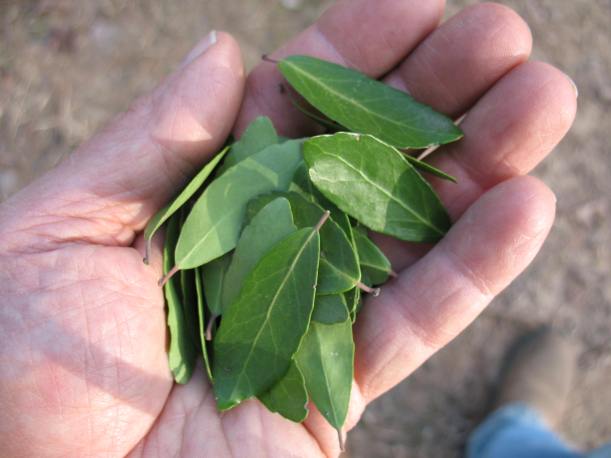
He reluctantly pulled out a strangely shaped box that was full of loose “pictures”. When I looked more closely, the images were actually printed on dry leaves, and were in no particular order. The photos themselves were not in great focus and I could not make out great detail. But in my dream’s mind something changed. I was captivated by the beauty of these objects, the way that the colors saturated the leaves and was unlike anything I had ever seen before. He had no real interest in them, as well as, no interest in talking about them much either when I prodded about the printing process of these beautiful objects. He offered me tea instead and I politely declined as I was on a road trip and had to “keep going”.

This morning waking up, I wondered what that experience would have been like if I had relaxed and stayed a little longer. What if I had accepted that tea? I was so preoccupied with the expected language of the interaction, I possibly missed a much deeper communication . Are my dreams metaphor? Are they prophecy? Are the just the left over considerations from the day that still need to be played out?

How can I use my practice to listen more quietly and be more receptive to the unexpected language of experience with the unknown?

handful leaves


1 Comment

April 6, 2016

I am exploring language and its power to create meaning. I read a quote by someone named Joseph Jaworski (someone I need to learn about) that caught my attention:

“I had always thought we used language to describe the world – now I was seeing that is not the case. To the contrary, it is through language that we create the world.”

 This quote is particularly illuminating because I have been considering my post yesterday and had some concerns. I want to stay committed to my understanding of language as not limited to words that describe thoughts. I think that I default to the spoken or written word as having a monopoly on usable language. I have spent a lot of my life in school and I think that misperception comes from the amount of time I spent in academics.

Don’t get me wrong. I love words. I love ideas and concepts. I could discuss, debate and distill thoughts for a very long time.(probably too long) I love the the reading or listening to a great story. But Jaworski’s quote illuminates so much more.

If language creates the world, then it must also have kinetic and physical qualities. It must have spatial and relational implications and dynamics. It has dimensions, complexity and capacity beyond the thought. Words and ideas are only part of the story.

I found Jaworski’s quote in a fascinating article written by Frances Baldwin.( another person I need to learn about) She poses a number of beautiful questions about how, as leaders of change, we can go beyond gathering data to create language around change, but apply ourselves to create the conditions for which and in which change can occur and meaning can be developed.

She talks about ideas and language reflecting in the world around us. The kernel of her article for me is a less explicit but deeply important connection to the experience of meaning. This is the thread I want to start pulling.

Self inquiry and thoughtful reflections are essential, don’t get me wrong. But linked with experience, meaning becomes more than a cerebral understanding. Meaning can become an embodied experience that will not only last longer in an individual, but can create deeper connection acceptance and solidarity amongst a group.

That is the power of language permeating experience. That is the magic of immersive environments that are crafted in service of evoking meaning through developing aptitudes for new language through patterns, experience and engagement. This works for an individual or a group. Language can be designed and fabricated to serve in the world. And like good design it is best done in an iterative fashion serving a collaborative conversational dynamic that leaves room for the possible outcomes from unknown sources.

How can we infuse our language with more embodied meaning? How can we provide opportunities to invite others around us to do it as well?

out of head


Leave a comment

April 5, 2016

There seems to be a fine line between being patient and seizing the right moment. I think it has to do with a cultivated sense of touch, and a well developed relationship to the body’s natural response to the world. I believe this is something that we can practice. It is something I am practicing. I’ll let you know what I find.

There is something intuitive or instinctual about knowing when to act or when to hold and observe. What my teachers have been modeling recently is the art and practice of developing instinctual vitality in the face of the world. I am learning that if I explore the way emotions sit in my body in different intensities, then I can not only recognize them when they emerge, but can express them in greater varying degrees in the face of varying moments of experience or interaction. These “emotional shapes” become a language that I can use to engage in the world.

I think about things in terms of language. I always have. Whether it is learning a foreign culture through a few words of the mother tongue, understanding the landscape of a new home by living through all four seasons, or the patterns of structure that are needed to hold up a roof, the language of a system holds deep secrets. It is not language itself in isolation, mind you. I have come to learn that the first step is to learn a bit of the “form” and the “grammar”, but the close in secrets lie in the application of language in real time. The mysteries are uncovered in subsequent opportunities and insights that come from immersion.

It is those insights that I can then translate into languages that I know already that make sense in other contexts. The more I spend time involved in, practicing and developing new language, the greater chance I have to make connections between people, organizations, and systems that at times can seem disparate, but I believe yearn for meaning and connection.

Back to the time question. Learning a language takes time. And knowing when to make those connections is equally important. I am still quite young in this process, though I am seeing more and more moments of refinement and agility in my life.

In times of fear and insecurity I use my linguistic gifts to show off and compensate for my own unsettled feelings. In service, when I can connect new ideas and connect people to new insights, I feel alive, not small. I feel the difference of a balanced practice between patience and action.

How do you know when its time to push or time to observe? For you, is listening embodied observation, or killing time before making the next statement?

LanguageImage


Leave a comment

April 4, 2016

Today is going to be short, and not sure how sweet. I let myself get quite distracted today, as well as get busy with things that I have been putting off for some time. It doesn’t fill me with the confidence I am calling forth. It does more to aid the the self critical mind that challenges my own sense of legitimacy.

To be legitimate. As if there is a particular moment in space and time that once arrived at, all will be revealed and resolved. It is that misperception that drives my limiting beliefs and self criticisms. It is a personal struggle with my own “legitimacy” that keeps me small, and makes me forget that its only a process.

I received a note today from a trusted friend with a quote that I have been using today as I skirt the edge of one of my bigger pain points in my journey and personal inquiry. I hope it can offer some value to you as well.

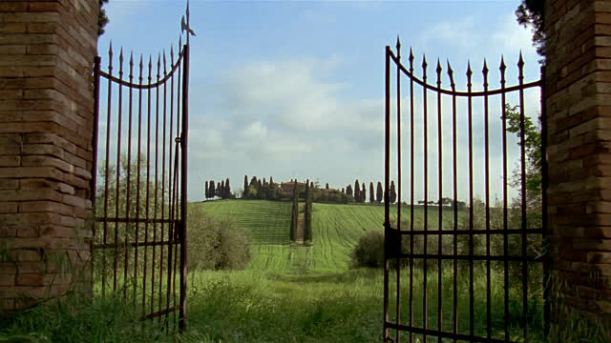
“Go to the end of the path until you get to the gate. Through that gate head straight toward the horizon. Sit and rest every now and again, but keep going, just keep on with it. Keep going as far as you can. That’s how you get there.”

-Michael Leunig

garden gate


1 Comment

April 3, 2016

“The interior shaping of ourselves (and our work) often takes longer than expected.”

Yesterday I spent the day in a group exploring the power and the possibility of one’s own agility with the relationship between intimacy and leadership. It was a powerful proposition that concepts, historically culturally dissimilar, have a capacity to be in service of each other. I might even go so far as to say that they have an essential relationship.

There are copious notes that I look forward to pouring over and ingesting more fully, but the quote above is what I woke up with this morning. It’s a pretty common theme for me these days. I find myself returning to some version of this like a mantra. I’m not surprised by it, because I’m still not totally comfortable with it.

I have a strange relationship to time. I seem most concerned about it when I am least engaged. When I am deep in a thread of experience, I rarely pay attention to it. In my current practice that requires patience and a longer timeline, there are waves of engagement that I find myself riding. I am changing the way that I look at value and metrics in regard to my growth, more specifically growth over time in service of my leadership in the world.

I’m not quite syncopated to the rhythm of it yet. There are moments where I hit notes of fear or concern and disconnect from that trust and faith in the power of a slower pace and notice myself flailing.

I get judgmental. I lash out. I retreat from my leading edge of compassion and curiosity. I stop being open to invitations from others, and close off opportunities for intimacy. This loop can whip itself into a big ugly mess. I’m well practiced at that king of personal derailment.

So the gentle reminder about the power of patience is just the cue I need in these moments. The act of agility is to ride the moments of derailment without fully falling off the tracks. The faith in the value of taking time and slowing down has everything to do with my success in carving the turns in my own deepening practice.

I am quite grateful to not be alone in this endeavor.

train